


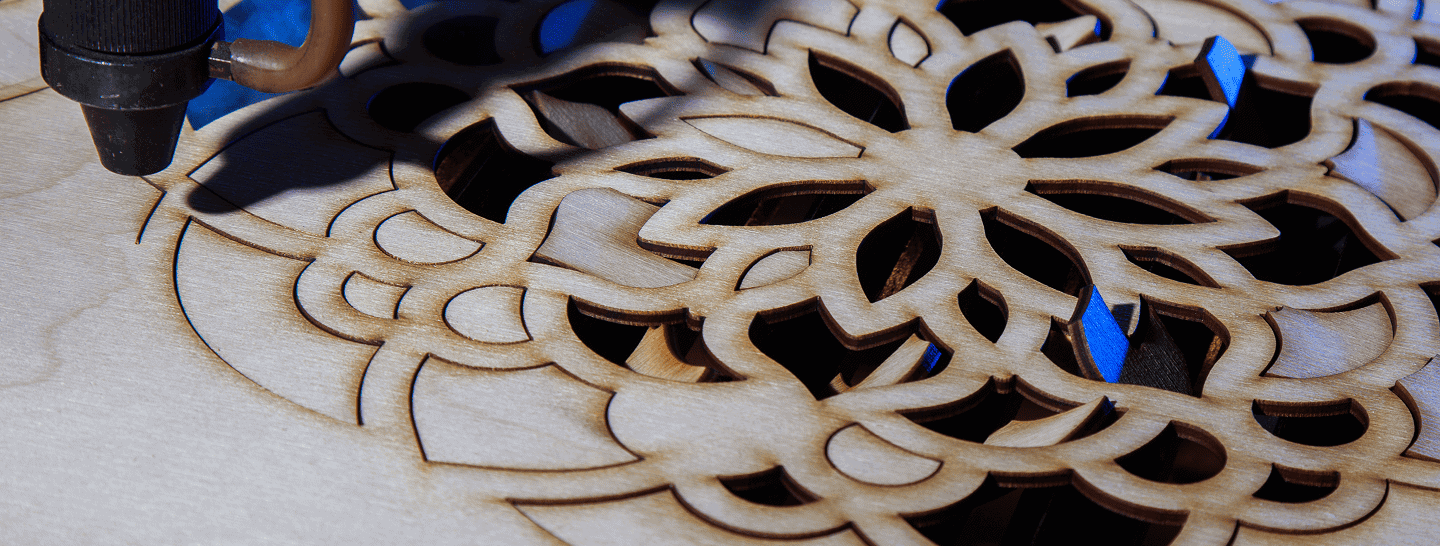
Baltic Birch Plywood for Laser Cutting and Engraving
Signage shops, makerspaces, and custom fabrication studios all face the same problem with cheap plywood on a laser bed: hidden voids, inconsistent glue lines, and edges that scorch instead of cutting clean. Baltic birch plywood for laser cutting solves that problem at the source, because the panel itself is built for precision work, not just general construction.
At Thomes North America, we’ve spent decades importing Baltic birch for customers across industries. Whether you’re running a fleet of CO2 lasers in a production shop or a single machine in a makerspace, our stock is selected with laser performance in mind. Learn more about what makes Baltic birch stand out for laser work before your next material order.
Why Baltic Birch Is Preferred for Laser Work
Baltic birch plywood from Thomes consists entirely of birch veneer, with no softwood or filler plies in the core. Each layer is uniformly thin with clean and void-free edges.
Void-Free Layers and Consistent Density
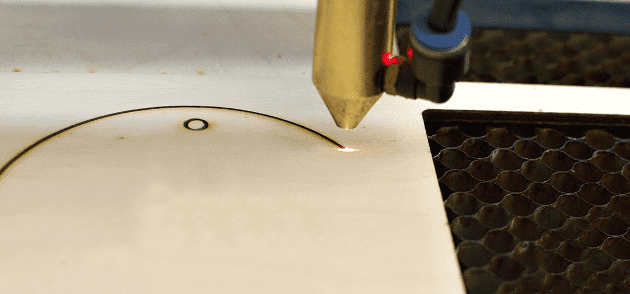
When laser cutting Baltic birch plywood panels, the beam meets the same resistance whether it’s tracing a detail near the edge or cutting through the center of a panel. Fewer internal voids also means fewer dropped-out chunks or blown-through spots that impact the quality of the cut piece.
Clean Cuts and Reduced Charring
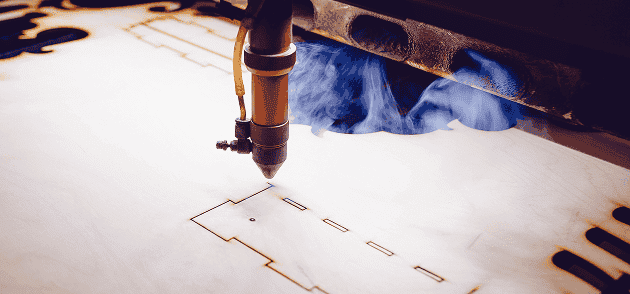
Baltic birch uses a waterproof glue line that burns clean under a laser rather than smoking, bubbling, or leaving a dark residue. Combined with the tight, even grain structure of Baltic birch plywood, this contributes to laser engraving with sharper detail compared to fir or other materials, where knots and grain shifts scatter the beam’s energy unevenly.
Choosing Stock for Cutting and Engraving
Thickness and Face Grade
At Thomes we stock Baltic birch from 3mm (1/8″) up to 30mm (1-3/16″), which covers common cutting and engraving needs across signage, prototyping, and fixture work. Thinner stock is commonly used for intricate cut work like layered signage or box joints, where a laser needs to pass cleanly through without excess char buildup. Thicker panels can be used for various structural components, jigs, and multi-pass engraving projects.
Regarding how face grades play into cutting and engraving, a higher grade with a smoother veneer face (e.g., Grade B or BB) can lend to higher contrast and clear details in engraved artwork and photo-etching.
Panel Size and Flatness
Flatness affects how consistently the beam stays in focus across the entire cutting field. At Thomes North America, we handle and store our panels to keep them in the best condition before they reach your shop.
Standard sheet sizes can accommodate most bed dimensions, and for shops running non-standard machines or high-volume jobs, our cut-to-size and machining services can prep panels to working dimensions ahead of time.
Getting Consistent Results
Material Handling and Air Assist
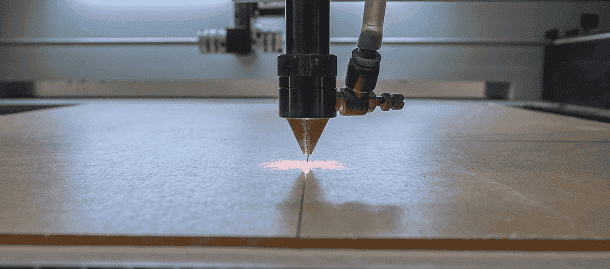
While laser settings vary by machine, wattage, and lens, a few handling principles hold across most setups. Compressed air directed at the cutting point, commonly known as air assist, clears debris and combustion byproducts from the beam path as it works, which reduces charring.
When preparing to handle plywood, run a test cut on scrap from the same panel before committing to a full production run, since even consistent stock can behave slightly differently from machine to machine or under different settings.
Sourcing Laser-Ready Baltic Birch from Thomes
At Thomes North America, we supply Baltic birch plywood for laser cutting and engraving customers across signage, makerspace, and fabrication industries, and we back that supply with machining and cut-to-size services so panels arrive ready for processing. If your current plywood source is costing you rework from voids, charring, or warped sheets, it’s worth switching to a panel built for the process.
Contact our team today to talk through thickness, grade, and volume for laser cutting or laser engraving plywood.